In just the past two years, the way businesses connect with customers has shifted dramatically, not because of a new social platform or algorithm update, but because of something far more powerful: artificial intelligence.
If you’ve ever wondered whether AI in digital marketing is hype or real transformation, here’s the truth: it’s already reshaping everything from ad targeting to email copy, customer service to content strategy. And for startup founders, entrepreneurs, and business owners, especially those thinking about scaling or selling a company, understanding this shift isn’t optional. It’s essential.
This isn’t about robot marketers taking over. It’s about real people using smarter tools to work faster, think deeper, and connect more meaningfully. In this in-depth guide, we’ll explore exactly how AI is changing digital marketing, what opportunities it creates, what risks to watch for, and, most importantly, how you can use it to grow a more resilient, valuable business.
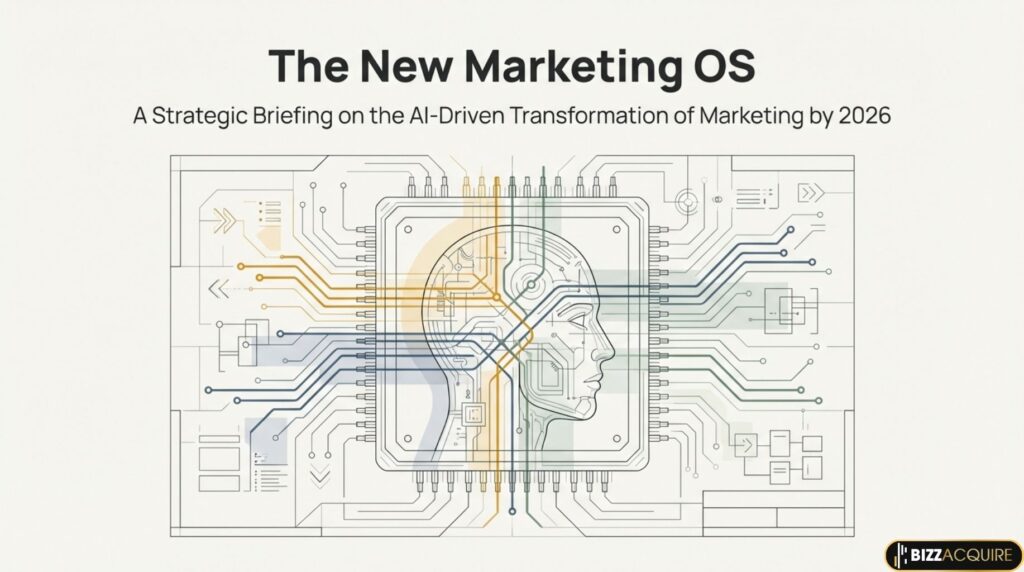
Why AI in Digital Marketing Is the Biggest Shift in a Decade
Think back to when Google Ads launched, or when Facebook introduced targeted advertising. Those were game-changers. But AI in digital marketing is different. It doesn’t just change where you advertise, it changes how you think.
Unlike traditional tools that automate tasks, AI learns, predicts, and adapts. It can analyze millions of customer interactions in seconds and suggest what message will resonate best with a specific person at a specific time. This level of personalization used to be reserved for Fortune 500 companies with huge data teams. Now, even solo founders can access it.
According to research from Boston Consulting Group and Harvard, generative AI already improves marketers’ creative output by 40%. That doesn’t mean AI is writing better slogans; it means marketers are spending less time on repetitive work and more time on strategy, testing, and innovation.
And that’s just the start. As AI-powered marketing tools become more advanced, the gap between businesses that use them wisely and those that don’t will keep widening.
For entrepreneurs evaluating online businesses, whether to buy, invest in, or scale, this is a critical signal. A company that’s already using AI thoughtfully may be more efficient, agile, and valuable than its financials alone suggest.

The Real Impact: Where AI Is Transforming Marketing Today
Let’s move past the buzzwords. Here’s where AI in digital marketing is making a tangible difference right now:
1. Hyper-Personalized Customer Experiences
Imagine sending an email where every product, image, and message is tailored not just to a segment, but to an individual. AI makes this possible by analyzing past behavior, preferences, and even real-time intent.
This goes beyond “Hi [Name].” It’s about showing the right offer at the right moment, like reminding a customer about an abandoned cart with a discount just as they’re about to browse competitors.
Brands using this level of personalization see higher open rates, better conversions, and stronger customer loyalty.
2. Smarter Ad Targeting and Bidding
Platforms like Google Ads and Meta already use machine learning to optimize campaigns automatically. But now, marketers are layering their own predictive AI models on top to forecast which audiences will convert, which creatives will perform, and when to pause or scale.
The result? Lower customer acquisition costs and higher return on ad spend, without constant manual tweaking.
3. Content Creation at Scale (Without Losing Soul)
Yes, AI can draft blog posts, social captions, and product descriptions in seconds. But the smartest marketers don’t treat it as a replacement; they treat it as a collaborator.
They use generative AI to overcome writer’s block, generate first drafts, or repurpose one piece of content into ten formats (email, LinkedIn post, tweet thread, etc.). Then, they edit, refine, and inject their brand voice.
This doesn’t dilute creativity; it multiplies it.
4. Predictive Analytics for Strategic Decisions
Wondering whether to launch a new product feature or enter a new market? AI can analyze customer data to predict demand, churn risk, and even which messaging will resonate.
This turns marketing from a cost center into a strategic growth engine, something that directly impacts business valuation, especially for SaaS or e-commerce brands.
5. Marketing Automation That Actually Feels Human
Modern marketing automation powered by AI doesn’t just send scheduled emails. It adapts based on behavior. If a user watches a demo video but doesn’t sign up, the system might send a case study. If they click but don’t buy, it might offer a limited-time incentive.
This dynamic responsiveness builds trust and revenue.

The Hidden Danger: When AI Flattens Your Brand
Here’s a truth many won’t admit: Too much AI can make your brand sound like everyone else.
Why? Because generative AI is trained on existing content, millions of blog posts, ads, and social updates are already online. It learns patterns, not originality. So when you ask it to “write a compelling headline,” it often gives you something polished… but predictable.
Over time, this leads to what experts call the “great equalization of marketing”, where every brand uses the same phrases, structures, and tones. The result? Your message disappears in the noise.
This is especially dangerous for businesses looking to stand out in crowded markets or prepare for acquisition. Buyers don’t just look at revenue, they look at brand strength, customer loyalty, and defensibility. If your messaging is indistinguishable from competitors, your business becomes harder to sell.
The solution?
Use AI for execution, not inspiration. Let your team’s unique perspective lead. Then use AI to scale what works.
As we’ve noted in our resources for founders evaluating online businesses, companies with an authentic voice and strong audience connection often command higher multiples, even with similar revenue.
Building Your AI-Ready Marketing Team: The “Left-Brain + Right-Brain” Strategy
The most successful companies aren’t choosing between creativity and data; they’re blending both. Think of it as growing two kinds of superpowers:
The “Left-AI Brain”: Data, Prediction, Systems
This side focuses on predictive AI, analytics, and automation. These are your marketing data scientists, analysts, and ops experts. Their job? To build tools that help the whole team make better decisions.
For example:
- A model that predicts which customer segments will respond to a seasonal campaign
- A dashboard that shows in real time which ad creative is driving the most qualified leads
- An algorithm that recommends next-best actions for sales follow-ups
Even small teams can start here. You don’t need 30 engineers, just one person who’s curious about data and willing to experiment with no-code AI tools.
The “Right-Brain” Creatives: Storytellers, Innovators, Visionaries
These are your brand builders, the people who know your audience’s fears, dreams, and unmet needs. They shouldn’t be replaced by AI. They should be protected and empowered.
Train them to use AI as a brainstorming partner, not a crutch. Encourage them to ask:
“What can only our brand say?”
“What emotion are we trying to evoke?”
“What idea haven’t we seen anywhere else?”
When these two sides work together, data informs creativity, and creativity gives data meaning, you get marketing that’s both smart and human.

Practical Steps to Leverage AI in Your Marketing (Without Losing Control)
You don’t need a massive budget or technical team to get started. Here’s how to begin, responsibly:
- Audit Your Repetitive Tasks
List everything that takes time but doesn’t require deep creativity: writing meta descriptions, formatting reports, scheduling social posts. These are prime candidates for AI-powered marketing tools. - Start with One Tool, Not Ten
Pick one area to experiment, like email copy or ad headlines. Try a tool like Jasper, Copy.ai, or even the AI features built into platforms like HubSpot or Mailchimp. Use outputs as drafts, not final products. - Create a Brand Voice Guide
Define your tone, values, and key phrases. This ensures AI stays on-brand. Example: “We sound helpful, not salesy. We use short sentences. We avoid jargon.” - Expand Your Data Sources
Don’t just rely on your own customer data. If you’re targeting a new audience (like Gen Z or professionals in a new industry), partner with complementary businesses for insights. Financial services, SaaS platforms, or event organizers often hold valuable data you can ethically tap into. - Measure Impact, Not Output
Track whether AI is improving results, not just activity. Are open rates up? Are ad costs down? Are customers staying longer? If not, adjust your approach.

Common Mistakes That Undermine AI Success
Even well-intentioned teams can fall into traps. Watch out for these mistakes to avoid:
- Using AI to generate original ideas
AI excels at remixing existing concepts. But true innovation comes from human insight. Never outsource your core messaging or product vision to a machine. - Ignoring data quality
“Garbage in, garbage out” still applies. If your customer data is messy or incomplete, your AI predictions will be flawed. Clean your data first. - Treating AI as a set-it-and-forget-it tool
AI models need feedback. If your chatbot gives bad answers, update its training. If your content feels generic, refine your prompts. Stay involved. - Over-automating human moments
Some interactions, like handling a complaint or celebrating a customer milestone, should stay human. Don’t let efficiency erase empathy.

Why This Matters for Business Buyers and Sellers
If you’re on BizzAcquire looking to buy an online business, pay close attention to how the seller uses AI. Ask:
- Do they use marketing automation to nurture leads efficiently?
- Are they leveraging data to personalize experiences?
- Is their content strategy scalable, or does it rely on one overworked founder?
A business already using AI in digital marketing thoughtfully may have hidden operational leverage, meaning it can grow revenue without proportionally increasing costs. That’s gold for buyers.
Conversely, if you’re selling a business, showcasing your AI maturity can boost your valuation. Highlight:
- Automated workflows that reduce manual labor
- Data-driven decision-making in marketing
- Scalable content and customer engagement systems
These signals tell buyers your business isn’t just profitable today, it’s built for tomorrow.
For more on this, explore our guides on what makes a digital business attractive to buyers and how to prepare your SaaS company for acquisition.
The Future of Digital Marketing Is Human + Machine
Let’s be clear: AI won’t replace marketers. But marketers who use AI will outpace those who don’t.
The future belongs to leaders who understand that technology is a tool, not a strategy. The magic happens when human insight meets machine speed. When empathy guides automation. When creativity is amplified, not erased.
For business owners, this is more than a marketing shift; it’s a competitive and financial imperative. Companies that harness AI in digital marketing wisely will grow faster, connect deeper, and become more valuable.
And for founders thinking about the long game, whether that’s scaling to $10M or selling to a strategic buyer, now is the time to build that foundation.

Final Thought: Choose Your Brain
As one marketing leader put it: “Every marketer today must choose their brain.”
Are you the creative visionary, the one who sees what others miss? Then double down on that. Use AI to free up your time, not define your ideas.
Or are you the analytical strategist, the one who loves data, systems, and optimization? Then invest in predictive AI skills. Become the person who turns insights into action.
Either way, don’t sit on the sidelines. The future of digital marketing is being written right now, and you get to shape it.
Ready to explore AI-ready businesses or learn how to future-proof your own? Bizzacquire helps founders, investors, and entrepreneurs navigate the evolving landscape of online business, where technology, strategy, and human insight come together to build lasting value.