
In today’s digital-first world, gaining visibility and driving traffic to your website are two of the most crucial elements in deciding your business’s success. Two of the best strategies for enhancing an organization’s online visibility are content marketing and search engine optimization (SEO). Together, these strategies work harmoniously to not only build brand authority and provide organic traffic but also to ensure long-term success, giving you the confidence that your efforts will pay off in the future.
But how precisely do content marketing and search engine optimization relate to one another? Let’s examine their unique roles and see how adding them to your digital marketing plan could greatly increase the effectiveness of your efforts.
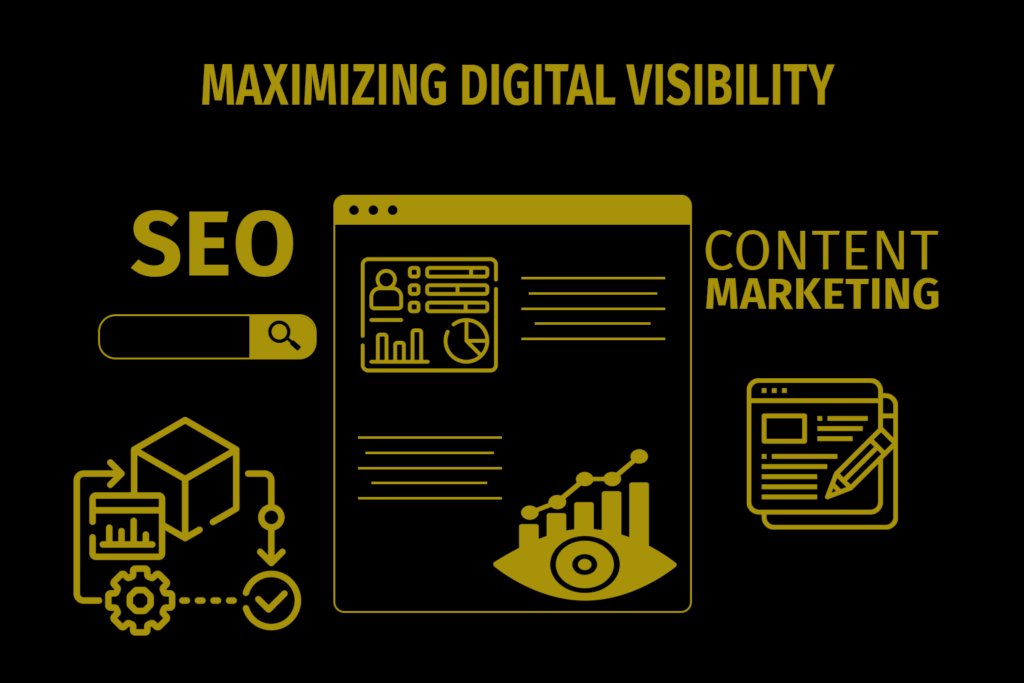
Businesses are constantly searching for new ways to improve their search engine rankings and draw in more targeted traffic due to the intense competition in the online space. While search engine optimization (SEO) focuses on optimizing a website to rank better in search engine results, content marketing aims to create material that is valuable, high-quality, and resonates with your target audience. These two strategies, when used in harmony, put you in the driver’s seat of your online visibility, creating some amazing outcomes.
Search engine optimization (SEO) is the process of optimizing your website and its content to increase its visibility in search engine results. The goal of attaining high search ranks is to draw in organic traffic—that is, traffic that doesn’t need to be purchased. The three main parts of SEO are as follows:
On Page SEO: This concept includes, for instance, optimizing individual web pages through the use of content, header tags, meta tags, and internal linking.
Off-page SEO tactic is acquiring backlinks from reputable websites. Techniques used outside of your website are referred to as off-page SEO.
Technical search engine optimization (SEO) is the process of optimizing a website for speed, mobile-friendliness, and well-structured content, making it easier for search engines to crawl and index.
Material marketing is a tactic that entails producing, disseminating, and promoting useful material to attract and engage a specific audience. Building relationships, authority, and trust with your audience is the aim of this activity. The following are some of the most crucial elements of content marketing:
Content that instructs, amuses, or solves problems for your audience is considered valuable and informative content. For instance, a comprehensive guide on SEO and content marketing strategies or a case study on successful digital visibility campaigns can be considered valuable and informative content.
Content that is customized to the unique needs and preferences of the audience you are attempting to attract is known as a targeted approach. This means creating content that directly addresses the pain points, interests, and questions of your target audience, increasing the chances of engagement and conversion.
Even though they concentrate on different areas, content marketing and search engine optimization (SEO) are tightly related. While content marketing is the process of creating content that is both valuable and relevant, search engine optimization (SEO) aims to improve the visibility of your content in search engines. A successful digital marketing strategy must include both content marketing and search engine optimization (SEO). While SEO aids in your visibility, content marketing ensures that once users arrive at your website, they will discover what they are looking for.

To make your content discoverable, SEO is a crucial step. The following are some ways that it supports content marketing:
Enhancing the Search Engine Performance of the Content: Using search engine optimization (SEO) strategies, such as using pertinent keywords, meta descriptions, and well-structured content, will raise the ranking of your content in search results.
Enhanced Discoverability By Putting SEO Best Practices into Practice: By employing effective SEO strategies, you can raise the exposure of your content and make it easier for your target audience to find it through search engines.
An Illustration of a Blog Post SEO Checklist
Using keyword research tools might help you uncover keywords that are related to your issue.
You must ensure that the target term appears in your title to optimize it.
Both the meta tags themselves and the meta description should contain your keywords.
An example of internal linking is a link to a similar page on your website.
Using alt text to describe images is crucial for better search engine indexing.
Verifying that your content is mobile device compliant is crucial.
By taking these actions, you can make sure that your content is search engine optimized, increasing the possibility that it will rank higher and draw more visitors.
Content marketing helps support your search engine optimization efforts and increases your website’s visibility. In this way:
Developing High-Quality and Pertinent Content: Your chances of ranking higher in search results will increase if the material you publish answers the questions of your audience and offers real value. It also encourages return visits, which is a sign that search engines are interested in your site.
Obtaining Backlinks: You will inevitably draw backlinks from other reliable websites when you produce material of a good caliber. Your website’s authority and search engine optimization rankings will both rise as a result.
By producing content that appeals to your audience, you can increase user engagement. Interactions like shares, clicks, and longer dwell times will be prompted by this content. Search engines can use these metrics to assess the value and relevancy of the content you have produced.

The following are some doable ways to link content marketing and search engine optimization (SEO) to maximize the benefits of each strategy:
To generate ideas for content, you should first conduct keyword research to guide the content creation process. Please make sure the topics you choose align with the knowledge your audience is seeking.
The integration of SEO goals into content schedules: Ensure your content is optimized for the targeted keywords and search intent, and create a content strategy that aligns with your SEO goals.
To make sure that existing material is still deemed relevant and search engine optimized, it should be regularly inspected and updated. Content will be changed, meta tags will be updated, and new keywords will be added as part of this process.
Employing many content formats allows you to expand the reach of your information by including, among other things, blogs, infographics, videos, and podcasts. Presenting content in multiple formats increases the likelihood that users will interact with it, and search engines favor a range of content types.
You need to keep an eye on your progress once you’ve implemented SEO and content marketing strategies. The following key performance indicators (KPIs) should be monitored:
In particular, traffic is the number of visitors to your website that come from organic search results.
The places your website occupies in search engine results pages for particular keywords are known as rankings.
The conversion rate is the proportion of visitors who complete desired actions, such as making a purchase or subscribing to a newsletter.
Engagement tools include metrics like time on page, bounce rate, and social shares.
Monitoring Search Engine Optimization and Content Marketing Success: Google Analytics may be used to track website traffic, user activity, and conversions.
You should utilize SEMrush or Ahrefs to track keyword ranks, backlinks, and the general health of your SEO.
We can ascertain what success looks like by examining the facts.
A successful marriage of search engine optimization and content marketing is demonstrated by maintaining a constant rise in rankings, positive engagement metrics, and stable traffic growth. By keeping an eye on these key performance indicators (KPIs), you may modify your strategy and continue to improve over time.
HubSpot is a prime example.
HubSpot effectively combines search engine optimization and content marketing through its blog, which is focused on educating marketers. By focusing on long-tail keywords and producing high-quality, useful content, they have seen significant increases in organic traffic and the quantity of leads produced.
Example 2: Moz
Moz’s provision of excellent SEO tools and advice has led to the establishment of a sizable community. Their content strategy has also helped them become recognized as an authority in the field of search engine optimization (SEO), leading to higher ranks and more visitors to their website.

Even if you have the best strategies in place, you may still make the following common mistakes that could hinder your effectiveness in content marketing and SEO:
Keyword stuffing as opposed to organic integration: Steer clear of overusing keywords in your writing. Your main goal should be to create content that is readable, educational, and organic.
Ignoring the Intention of the User: Always keep in mind the intention behind the keywords, and make sure that your material delivers answers to the questions that people have.
It is never acceptable to sacrifice the quality of your content to achieve a higher ranking in search engine results. High-quality content is necessary to attain engagement and long-term success.

A strong collaboration between search engine optimization (SEO) and content marketing can result in increased brand authority, increased user engagement, and organic traffic. By focusing on producing content that is valuable and of high quality, together with information that is appropriately optimized for search engines, you can make sure that your website is discoverable and engaging for your audience.
To help you generate content, conduct keyword research regularly.
Use the best approaches for search engine optimization to optimize both new and current content.
Try out a variety of formats for your content and modify them to suit your audience’s tastes.
To improve results and increase your online visibility, now is the perfect time to start integrating content marketing with search engine optimization (SEO)!
SEO is about optimizing your website and content so search engines can rank it higher. Content marketing is about creating valuable content that attracts and engages your audience.
Do keyword research, align topics with search intent, optimize titles and meta descriptions, use internal linking, and regularly update old content.
Google Analytics, Google Search Console, SEMrush, and Ahrefs.
In 2025, SEO is focused on adapting to an AI-driven, user-centered search landscape where relevance and experience matter most.
Have questions or looking to grow your business? Email us. The BizzAcquire team is ready to help with strategy, marketing, or development, whatever you need to take your brand to the next level.