Top SEO Trends 2025, And Why Bizzacquire Leads the Next Search Revolution
8 min read
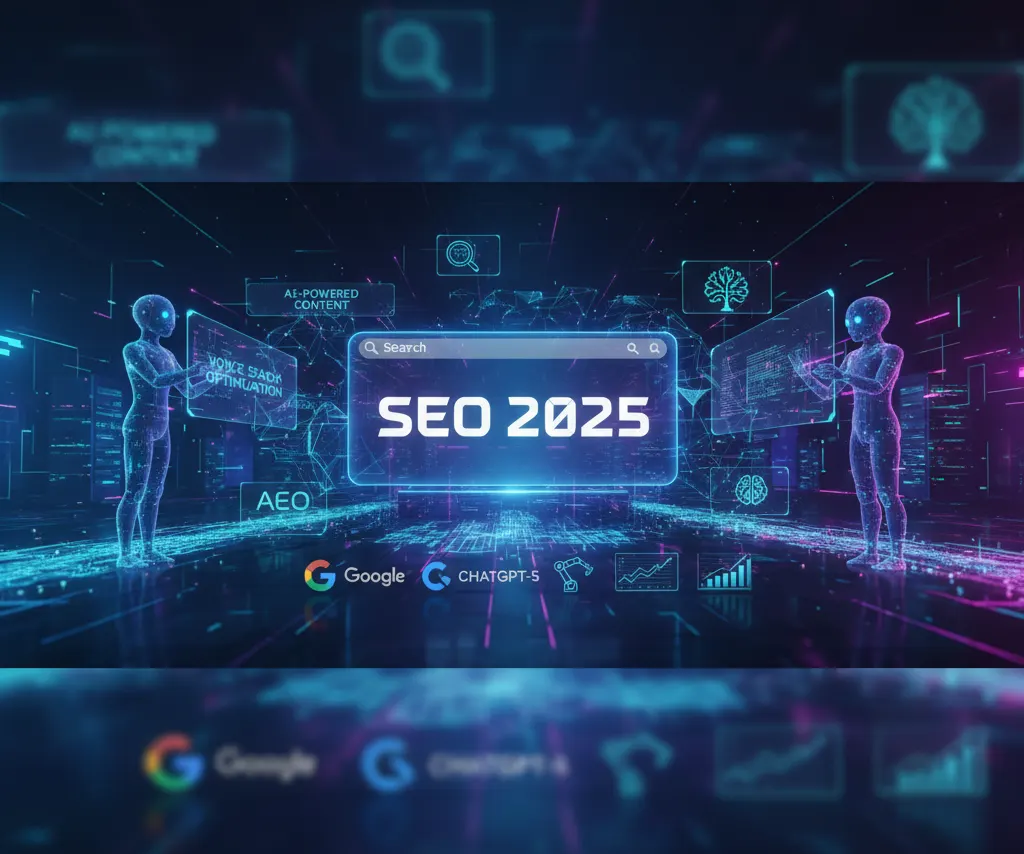
The Future of SEO in 2025: Beyond Keywords, AI & GEO Optimization
Search engine optimization as we know it is dying. The familiar playbook of keyword stuffing, link schemes, and surface-level content won’t survive 2025’s algorithmic revolution. Google’s AI-powered Search Generative Experience (SGE), voice search evolution, and user intent sophistication have fundamentally shifted how search works.
While competitors scramble to understand these changes, forward-thinking businesses are already adapting. They’re implementing Answer Engine Optimization (AEO), Geographic Engine Optimization (GEO), and Search Experience Optimization (SXO) alongside AI-powered strategies that deliver real results.
This comprehensive guide reveals exactly how SEO will evolve in 2025 and provides actionable frameworks to future-proof your digital presence. Whether you’re a business owner in Dhaka or managing global SEO campaigns, these strategies will help you dominate search results while your competitors fall behind.
Why Traditional SEO Can't Do It Alone Anymore
Traditional SEO relied on a simple formula: target keywords, build backlinks, optimize meta tags, and wait for rankings. This approach worked when Google’s algorithm was less sophisticated and users searched with basic keyword phrases.
Those days are over.
Google’s 2025 Algorithm Update — What It Means for Your Business
Google’s latest algorithmic updates represent the most significant shift since the introduction of RankBrain in 2015. The search giant now prioritizes three critical factors that traditional SEO completely misses:
User Intent Understanding: Google’s AI now interprets the meaning behind searches rather than matching exact keywords. A search for “best coffee in Dhaka” might surface results about coffee culture, brewing techniques, or local café reviews—not just pages stuffed with that exact phrase.
Conversational Query Processing: With over 50% of adults using voice search daily, Google optimizes for natural language patterns. Instead of “SEO agency Dhaka,” users ask, “Who are the best SEO experts near me?”
Experience-Based Rankings: Core Web Vitals, user engagement metrics, and real-world authority now outweigh keyword density and backlink quantity.
Keywords Are Dead? Why Search Intent & AI Matter More Than Ever
Keywords aren’t completely dead, but their role has fundamentally changed. Modern search engines understand semantic relationships, context, and user behavior patterns that make traditional keyword optimization obsolete.
Consider this evolution: A Bangladeshi e-commerce site previously optimized for “buy women’s clothing online Bangladesh.” Now, they succeed by creating content that answers questions like “What are the latest fashion trends for working women in Dhaka?” or “How to choose professional attire for Bangladesh’s climate?”
As one SEO manager from a leading Dhaka agency told us: “We used to chase keywords; now we chase answers.”
This shift requires content that demonstrates expertise, authority, and trustworthiness (E-A-T) while addressing specific user problems. Success comes from understanding your audience’s journey and providing valuable solutions at each stage.
AEO, GEO & SXO — The SEO Trifecta You Can't Ignore
Artificial intelligence has transformed from a futuristic concept to an essential SEO reality. Google’s integration of AI throughout its search infrastructure means businesses must adapt or risk becoming invisible online.
What is AI SEO? Real Examples That Anyone Can Understand
AI SEO involves optimizing content for artificial intelligence systems that power modern search engines. Instead of targeting specific keywords, you create content that AI can easily understand, categorize, and recommend to users.
Here’s a practical example:
Traditional SEO Approach:
⦁ Target keyword: “digital marketing services Dhaka”
⦁ Create a service page with keyword variations
⦁ Build backlinks with anchor text containing the keyword
AI SEO Approach:
⦁ Identify user intent: Business owners need digital marketing solutions
⦁ Create comprehensive content addressing specific problems
⦁ Structure information using schema markup for AI understanding
⦁ Optimize for voice search queries and conversational patterns
The AI approach generates more qualified traffic because it aligns with how users actually search and what they need.
Google’s Search Generative Experience (SGE) and Why It Changes Everything
SGE represents Google’s most significant interface change since the introduction of featured snippets. When users ask questions, SGE provides AI-generated answers sourced from multiple websites, fundamentally changing how traffic flows to websites.
Under SGE, ranking #1 for a keyword doesn’t guarantee traffic. Instead, websites that provide clear, authoritative information that AI can easily extract and synthesize will dominate search results.
This creates new opportunities for businesses that understand how to structure their content for AI consumption while maintaining human readability and engagement.
Tools That Work in Real Workflows: ChatGPT, Surfer AI, Jasper, NeuronWriter
Modern AI SEO requires sophisticated tools that integrate seamlessly into content creation workflows:
ChatGPT for Content Strategy: Generate topic clusters, create content outlines, and develop FAQ sections that address real user questions.
Surfer AI for Content Optimization: Analyze top-ranking pages and receive AI-powered recommendations for improving content relevance and structure.
Jasper for Scalable Content Creation: Produce high-quality, SEO-optimized content that maintains consistent brand voice across multiple pieces.
NeuronWriter for Semantic Optimization: Optimize content for semantic search and ensure comprehensive topic coverage that AI systems prefer.
These tools work best when combined with human expertise and strategic thinking, creating content that satisfies both AI algorithms and human readers.
AI-Powered Search Is Here — Are You Ready?
The future of search optimization extends far beyond traditional SEO tactics. Three interconnected strategies—Answer Engine Optimization (AEO), Generative Engine Optimization (GEO), and Search Experience Optimization (SXO)—form the foundation of successful 2025 SEO campaigns.
AEO (Answer Engine Optimization) — Optimizing for AI-Powered Answers
Answer Engine Optimization focuses on structuring content so AI systems can easily extract and present information to users. This involves creating content that directly answers questions while providing comprehensive context.
Key AEO Strategies:
⦁ Structure content using clear headings and subheadings
⦁ Implement FAQ schema markup for common questions
⦁ Create concise, authoritative answers to specific queries
⦁ Develop topic clusters that cover subjects comprehensively
⦁ Use bullet points and numbered lists for easy extraction
For Bangladeshi businesses, this might mean creating content that answers questions like “What digital marketing services do small businesses in Dhaka need?” rather than simply listing services.
GEO (Generative / Geographic Engine Optimization) — Local SEO 2.0
Generative Engine Optimization adapts content for AI-generated search results while Geographic Engine Optimization enhances local search visibility. Both strategies recognize that modern search results are personalized, location-aware, and context-sensitive.
GEO Implementation for Local Businesses:
⦁ Optimize for “near me” searches with location-specific content
⦁ Create locally relevant content that addresses regional concerns
⦁ Implement local business schema markup
⦁ Generate content that AI can use for local recommendations
⦁ Build authority through local partnerships and community involvement
A Dhaka-based agency might create content about “Digital marketing challenges for Bangladeshi SMEs” rather than generic digital marketing advice.
SXO (Search Experience Optimization) — Winning User Intent, Not Just Rankings
Search Experience Optimization focuses on the complete user journey from search query to conversion. SXO recognizes that modern SEO success depends on user satisfaction, engagement, and task completion.
SXO Best Practices:
⦁ Optimize page loading speed and mobile responsiveness
⦁ Create intuitive navigation that matches user intent
⦁ Provide clear calls-to-action at appropriate journey stages
⦁ Monitor user behavior metrics and adjust accordingly
⦁ Design for accessibility and inclusive user experiences
The 2025 SEO Pyramid: AI → AEO → GEO → SXO
Think of modern SEO as a pyramid where each level builds upon the previous:
Foundation (SXO): Excellent user experience and technical performance
Structure (GEO): Local relevance and AI-optimized content organization
Content (AEO): Authoritative answers that AI systems can extract and present
Intelligence (AI): Machine learning insights that guide strategy and optimization
This integrated approach ensures your SEO strategy remains effective regardless of algorithm changes or new search features.
Actionable SEO + AI Strategies for 2025
Understanding theory is valuable, but implementation drives results. These proven strategies will help you adapt your SEO approach for 2025’s AI-powered search landscape.
Voice & Visual Search Optimization
Voice search continues growing, with over 40% of adults using voice search daily. Visual search through tools like Google Lens is also expanding rapidly. Optimizing for both requires different approaches than traditional text-based search.
Voice Search Optimization:
⦁ Target long-tail, conversational keywords
⦁ Create content that answers specific questions
⦁ Optimize for local voice searches (“Where can I find…”)
⦁ Use natural language in your content
⦁ Implement FAQ schema markup
Visual Search Optimization:
⦁ Use high-quality, descriptive images
⦁ Implement image alt text with detailed descriptions
⦁ Add structured data for image content
⦁ Create visual content that demonstrates products or concepts
Schema Markup for AI Discoverability (FAQ + HowTo)
Schema markup helps AI systems understand your content structure and extract relevant information for search results. FAQ and HowTo schemas are particularly valuable for 2025 SEO strategies.
Want this kind of thinking applied to your marketing?
Book a free consultation and we will look at where your growth is actually stuck.